
.svg)
.svg)
.svg)


%201.svg)
April 2, 2026
The Link Building Playbook That Still Works in 2026: Earn Authority Without Paying for It
Link building has a reputation problem it does not entirely deserve. When most Australian marketing teams hear the term, they picture one of two things: the paid link schemes that Google has been penalising for years and that still circulate in the shadier corners of the SEO industry, or the outreach programmes that require significant labour that produce a handful of marginal links per month at a cost that makes the return on investment look questionable at best. Both of these pictures miss the methods that actually work in 2026, which share a common characteristic: they earn links as a byproduct of producing something valuable rather than acquiring them as a standalone purchase or extraction exercise. The distinction matters commercially because earned links are structurally different from purchased links. They tend to come from more relevant and more authoritative sources. They are more stable because they are not contingent on a payment being maintained. They are more likely to produce lasting ranking improvements because they represent genuine signals of editorial endorsement. And they are not a liability that sits waiting for the next Google spam update to detonate. This article covers the link earning methods that Australian businesses and their marketing teams can execute in 2026 to build domain authority through genuine editorial signals rather than purchases or schemes.


Handing the Keys to Google's AI: How to Keep Control of Your Ad Budget Inside Performance Max
Performance Max is Google's most automated campaign type, and also the one that provokes the most anxiety among Australian advertisers who have spent years developing campaign management practices that depend on visibility, control, and the ability to make deliberate, measurable changes. The anxiety has some basis. Performance Max does take more control away from the advertiser than any previous Google Ads campaign type: it chooses the placements, it selects the creative combinations, it determines the bid for each impression, and it distributes the budget across Google's inventory in ways the advertiser cannot directly specify. The part of the anxiety that is not well based is the conclusion that these constraints make Performance Max unmanageable or a blank cheque handed to Google's algorithm. Performance Max has a specific set of levers that, when correctly configured, give advertisers meaningful influence over where the budget goes, which audiences it targets, which creative assets it uses, and which conversion events it optimises toward. Understanding and using these levers is the difference between a Performance Max campaign that works within the advertiser's strategic parameters and one that wastes budget on inventory, audiences, and objectives that the business never intended to pursue.

When Customers Search on TikTok and Instagram Instead of Google — How Australian Brands Adapt
Something structurally significant has changed in how younger Australian consumers research purchases, and most Australian brands have not yet adjusted their discoverability strategy to reflect it. A proportion of the audience that would previously have opened Google to search for "best brunch spots Fitzroy" or "honest review Mecca skincare serum" is now opening TikTok or Instagram instead. They are searching within these platforms for short video content that shows them what they want to know: the actual food, the actual product, the actual experience, from people who have actually been there or used the item. This is not a marginal behaviour limited to a niche demographic. TikTok's own data has reported that a significant share of its users use the platform as a search engine, and the query patterns on Instagram's search function have expanded well beyond celebrity and hashtag discovery into product, venue, and service research. For Australian brands that have built their discoverability strategy entirely on Google organic search and Google Ads, this shift represents a gap that is growing over time as the audience that uses social platforms as primary discovery tools ages into demographics with higher purchasing power. This article covers what the shift to social search means practically, what content and account configuration signals these platforms use to surface results, and what Australian brands need to do differently to be found on TikTok and Instagram by people who are actively looking for what they offer.
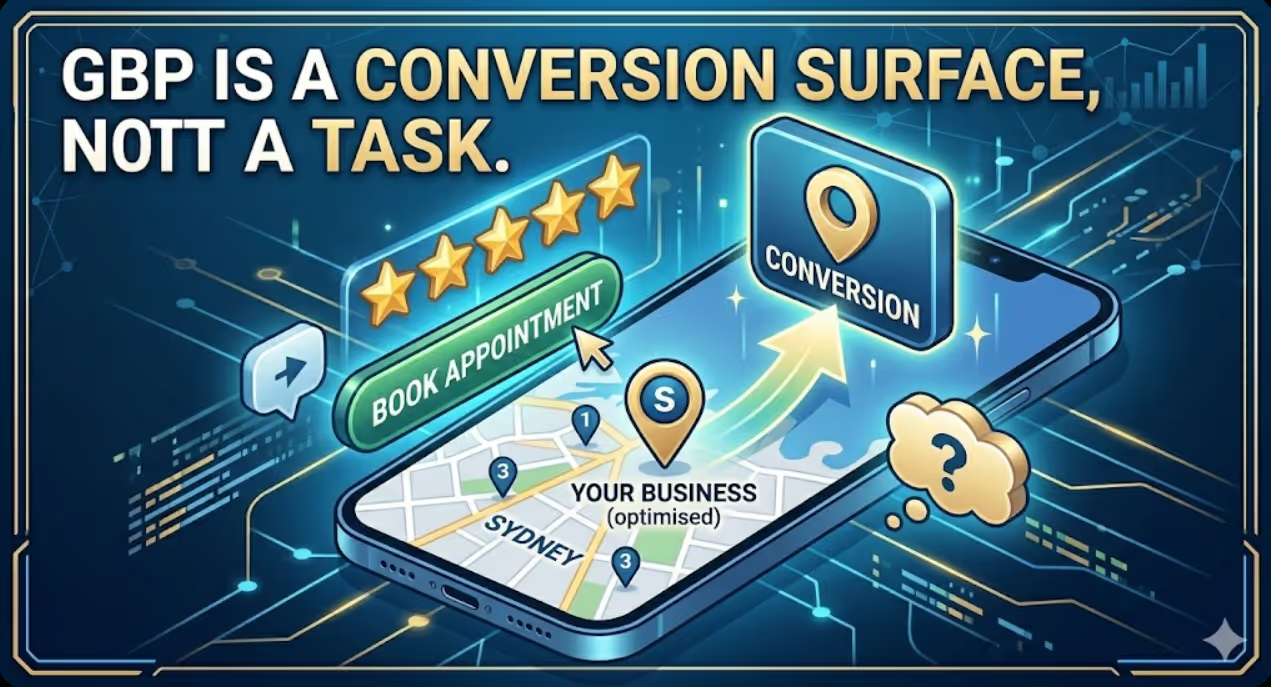
How to Build a Google Business Profile That Converts Browsers Into Booked Appointments
A Google Business Profile that has been set up and left alone is doing roughly the same work as a shop front with the lights off. It confirms the business exists and provides the phone number, but it is not actively persuading a local searcher who is comparing three businesses in the search results to choose this one rather than the competitors sitting directly above and below it in the local pack. The businesses that win appointments from Google local search are not simply those that are closest to the searcher or those with the most reviews, although proximity and reviews both matter. They are the businesses that have treated their Google Business Profile as a conversion surface rather than a directory entry, and have populated every element of the profile with the specific information, imagery, and social proof that a local searcher needs to make a confident decision to book rather than keep browsing. The difference between a profile that ranks and converts and one that ranks but loses its potential customers to competitors is in the specific decisions this article covers: how to write the business description, which photos produce engagement, how to use posts to maintain freshness signals, how to respond to reviews in a way that builds rather than diminishes trust, and how to configure the booking and contact features that reduce friction between intent and appointment.
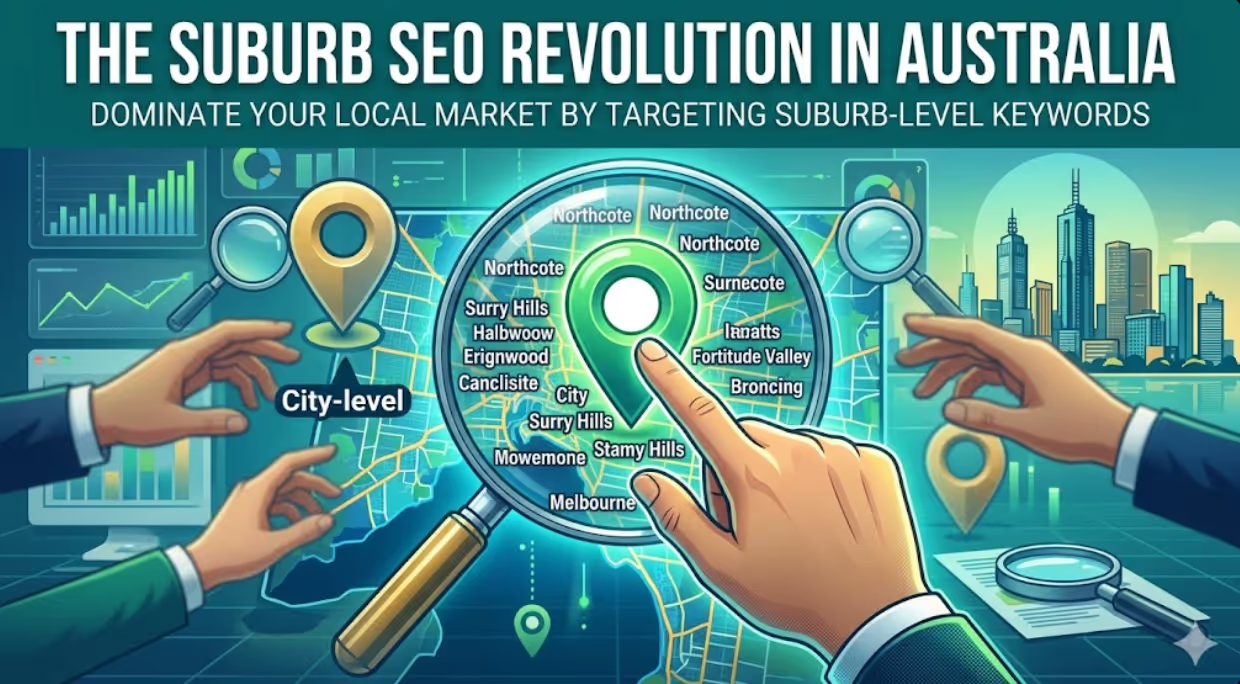
The Suburb Strategy: How to Dominate Hyperlocal Search Before Your Competitors Even Know It Exists
Every plumber in Melbourne is competing for "plumber Melbourne." Every accountant in Brisbane is competing for "accountant Brisbane." Every conveyancer in Sydney is competing for "conveyancer Sydney." These are the keywords that every competitor knows about, every competitor has built pages for, and every competitor is paying for in Google Ads. They are also the keywords where the gap between the most established and businesses with strong funding and the smaller, newer, or more constrained ones is widest, and where breaking into the top three positions requires either significant domain authority, a substantial paid media budget, or years of consistent investment in link acquisition. Search at the suburb level is a different competitive environment entirely. "Plumber Footscray," "accountant Fortitude Valley," and "conveyancer Chatswood" are searched thousands of times per month across the Australian market by people who are specifically looking for a business near them, but they are contested by a fraction of the competitors who contest the equivalents at the city level. Most Australian service businesses have not built content targeting individual suburbs because they are focused on the city keywords they already know are valuable. This article covers the suburb strategy, a systematic approach to building hyperlocal search presence across the suburbs an Australian service business actually serves, that captures a category of local search traffic with strong intent that most competitors leave entirely uncontested.

What Google Actually Means by 'Helpful Content' — and How Australian Businesses Can Prove It
The phrase "helpful content" is so simple and so intuitive that it has almost entirely lost its meaning in the context of SEO. Every marketing team believes the content they produce is helpful. Every agency pitching a content programme describes it as helpful. The question is not whether businesses intend to produce helpful content. The question is whether the specific signals Google uses to assess helpfulness are being satisfied, and most Australian businesses would be surprised to discover how specific those signals are, how different they are from general notions of quality, and how many content programmes that feel like they are producing content of high quality are failing the helpfulness assessment in ways that are entirely measurable and correctable. This article explains what Google actually means when it assesses whether content is helpful, what the specific signals are that its quality rater guidelines and the Helpful Content system use to make that assessment, and what Australian businesses producing content in 2026 need to do differently to satisfy those signals rather than simply feeling like they should be satisfied.
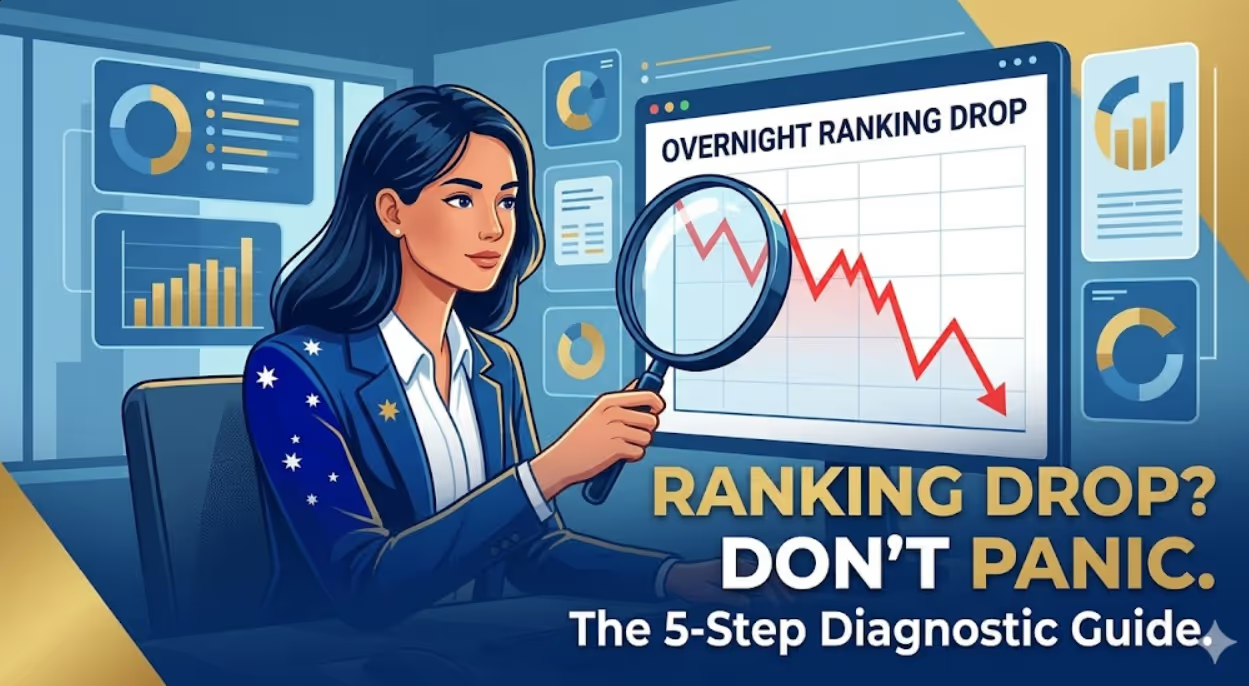
Your Google Rankings Dropped Overnight — Here's How to Tell Whether It's Your Fault or Google's
An overnight drop in Google rankings is one of those events that produces an immediate and powerful impulse to do something, to make changes, to fix whatever is broken, to act. This impulse is almost always wrong before the diagnosis is complete, because the correct action depends entirely on what caused the drop, and the cause is not always what it appears to be. The most common diagnostic errors Australian businesses make after a ranking drop are treating a Google algorithm update as a technical problem and spending weeks on site audits that address nothing, treating a technical problem as a quality issue and producing new content that does not fix the broken crawl configuration causing the drop, and making a series of changes in rapid succession that makes it impossible to determine which change, if any, produced the recovery. A ranking drop is a signal. Before responding to a signal, you need to know what it is signalling. This article provides the systematic diagnostic process that Australian businesses and their marketing teams should follow immediately after an overnight ranking drop to identify the real cause before taking any remediation action.
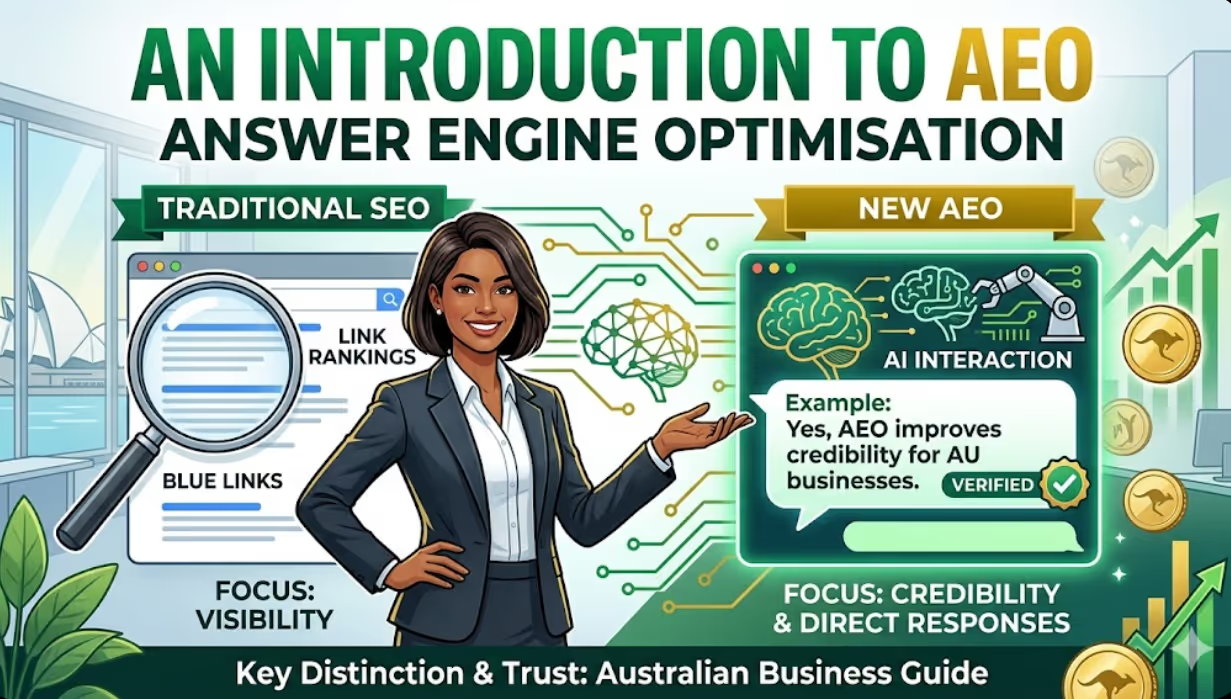
The Answer Engine Era: How to Get Your Business Cited in ChatGPT, Gemini, and Google's AI Summaries
The search engine as the primary discovery mechanism for Australian businesses is not disappearing, but it is being joined by something that operates on a different logic. Answer engines, the AI tools that synthesise information and generate direct responses to questions rather than returning a list of links, are now processing a meaningful and growing portion of the queries that would previously have produced a standard search results page. ChatGPT answers questions with citations. Gemini produces overviews with sourced references. Google's AI Summaries appear above the organic results for an expanding range of queries. The businesses and sources that appear in these answers are not there by accident. They have produced the kind of content, earned the kind of credibility signals, and structured their information in the way that answer engines use to decide whose information to draw from and whose name to include in the response. This article is about how to become one of those sources rather than one of the businesses that is absent from AI-generated answers entirely, with specific guidance on the requirements of each major AI answer platform used in the Australian market in 2026.

Why Your Australian Business Is Invisible to AI — and What to Do About It
A growing proportion of Australian consumers and business buyers are starting their product and service research not with a Google search but with a conversational query to an AI tool. They are asking ChatGPT which accounting software suits a small business in Sydney. They are asking Perplexity which builders are highly regarded in Melbourne's inner suburbs. They are asking Google's AI Overview what the best options are for commercial cleaning services in Brisbane. They are asking Claude what digital marketing agencies in Australia specialise in ecommerce. In each of these interactions, the AI generates a response by synthesising information from its training data, its web access, and the sources it considers credible and comprehensive for the topic. Most Australian businesses are not in that response. Not because their product or service is inferior, but because the signals that AI systems use to identify, evaluate, and recommend businesses are different from the signals that have traditionally driven Google rankings, and most Australian businesses have not yet adapted their digital presence to produce those signals. This article explains why Australian businesses are invisible to AI queries, what determines which businesses appear in AI-generated recommendations, and the practical steps to improve visibility in discovery mediated through AI tools.
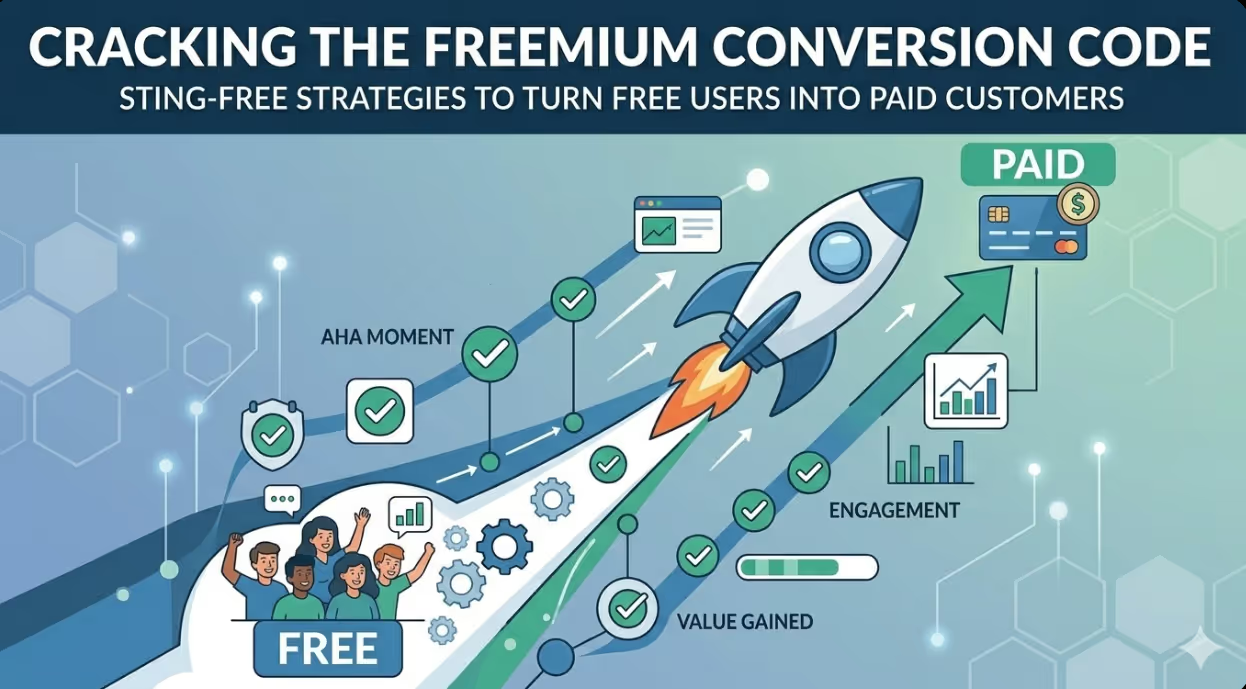
Freemium Model Optimisation: Converting Free to Paid Users
The freemium model is simultaneously one of the most effective user acquisition strategies available to Australian digital product businesses and one of the most frequently misunderstood conversion opportunities within those businesses. The misunderstanding is not in the acquisition part. Freemium acquires users with extraordinary efficiency: removing the price barrier from the first experience reduces friction to near zero, and a free product that is well designed can build a user base at a scale that paid acquisition alone could never achieve at the same cost. The misunderstanding is in the conversion part. Most Australian SaaS businesses and digital product companies treat the conversion from free to paid as a function of the pricing page and the upgrade prompt, as if the decision were made in a moment rather than across weeks or months of product experience. The reality is that the conversion from free to paid is the cumulative outcome of every interaction the user has had with the product, every email they have received, every friction point they have encountered in the free tier, and every moment of value they have experienced that makes the case for the paid tier to be worth their money. Understanding and optimising each of these dimensions is what separates the freemium products that convert at 5 to 10 percent from those that convert below 2 percent, which represents the difference between a commercially sustainable freemium model and an expensive user acquisition programme with a poor return.

Instagram Growth Services: Follower Quality vs Quantity for Australian Brands
The follower count on an Australian business's Instagram account is one of the most visible and most misleading metrics in social media marketing. It is visible because it appears on the profile, it is reported in every social media audit, and it is the number most stakeholders look at when assessing whether the brand's Instagram presence is meaningful. It is misleading because the commercial value of a follower depends entirely on who they are and whether they are genuinely interested in the brand, not on whether they exist in the follower count. An account with 80,000 followers assembled through purchased followers, aggressive tactics including following then unfollowing accounts, giveaway audience inflation, or international audience accumulation will consistently underperform an account with 8,000 followers who are real Australian consumers in the relevant category who discovered the brand through genuine interest and continue to engage with its content. The commercial consequences of this difference play out in every post, every story, and every paid campaign that uses the account's organic audience as a seed list for lookalike targeting. This article covers what genuinely valuable Instagram growth looks like for Australian brands, what services and approaches produce it, and what the warning signs are that a follower base has been built on foundations that will not convert to commercial outcomes.
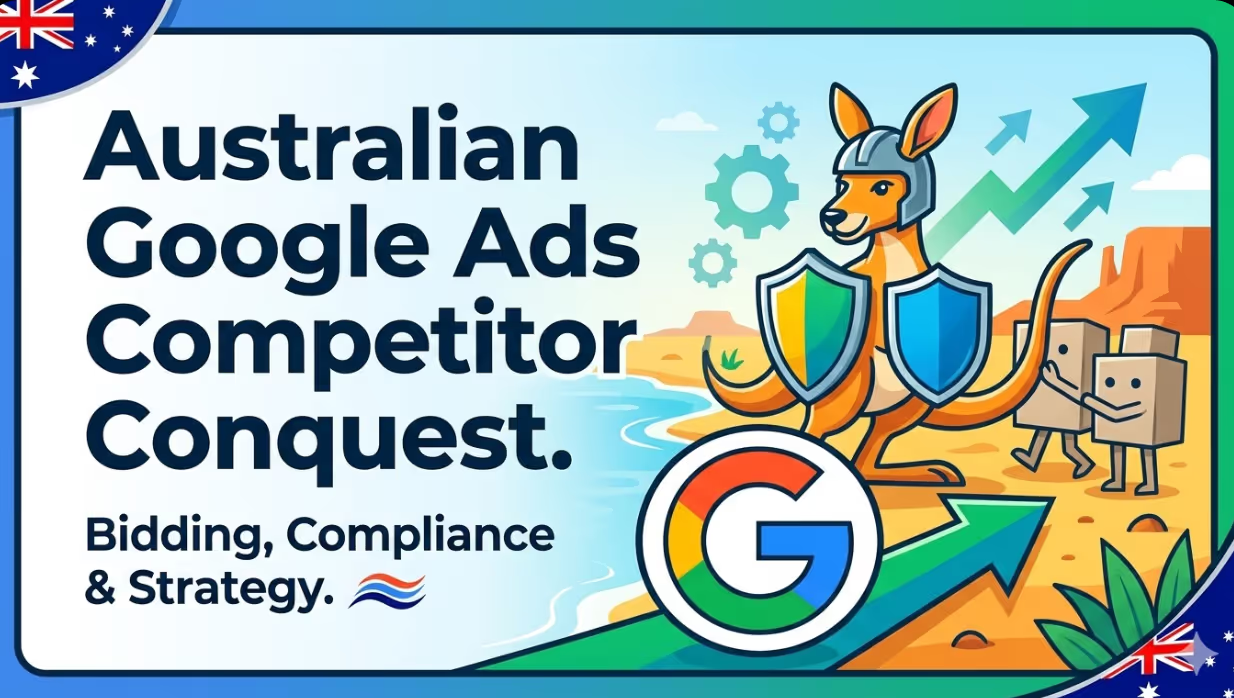
PPC Competitor Conquest Strategy: Bidding on Australian Competitor Keywords
Bidding on a competitor's brand name in Google Ads places your ad in front of a searcher who is actively researching that competitor but has not yet committed to them, which is one of the highest-intent audiences available in paid search outside of direct brand searches for your own business. The searcher is already in the category, already aware that they have a problem to solve, and actively evaluating options. They are not in the early research phase. They are in the shortlisting phase, and an ad that appears at this moment with a compelling alternative message has a genuine opportunity to divert a qualified prospect from a competitor to the advertiser. This is the commercial logic behind competitor conquest campaigns, and it is why they feature prominently in the PPC strategies of the most aggressive and commercially sophisticated brands in competitive Australian markets. The legal and ethical dimensions of competitor bidding in Australia require careful attention, however. Bidding on a competitor's brand name as a keyword is generally permitted, but using the competitor's trademark in the ad copy itself is not, and the line between the two is where most conquest campaigns either fail for legal reasons or underperform because the ad cannot use the most direct comparison language the advertiser would want. This article covers the strategy, configuration, copywriting, and compliance requirements for running an effective competitor conquest campaign in the Australian market.
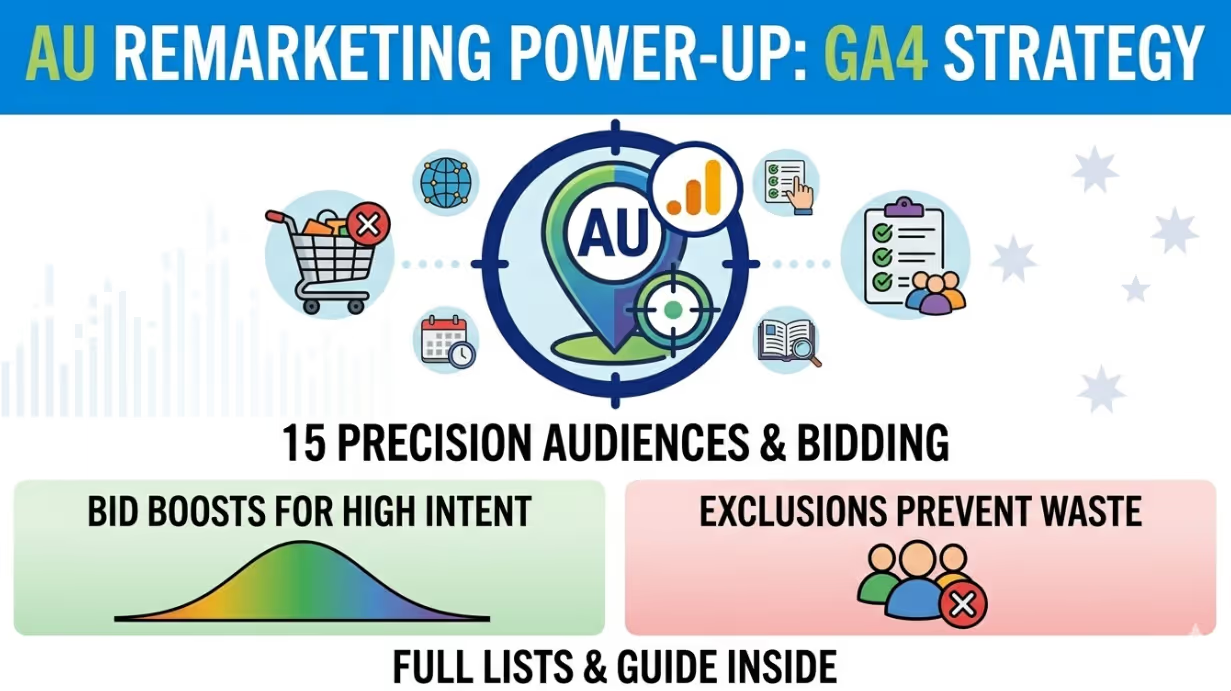
Google Ads Extensions Mastery: Using All 13 Extension Types Effectively
Google Ads extensions, now officially referred to as assets in the Google Ads interface, are the most underused lever in most Australian Google Ads accounts. Every extension type that is correctly configured and eligible to serve increases the physical size of the ad in the search results, provides additional reasons for a searcher to click, and contributes to the Quality Score that affects the CPC the account pays in each auction. Yet most Australian accounts deploy only the most obvious extension types, leaving sitelinks and callouts in place from the original setup and ignoring the other eleven types that could be adding incremental value to every eligible impression. The extensions that are missing are often the ones with the most commercially targeted impact: promotion extensions that surface an active offer at the moment of search, price extensions that give searchers the pricing context they need before clicking, structured snippets that build confidence in the range and depth of the offering, and lead form extensions that allow conversion requiring minimal friction without a landing page visit. Understanding all thirteen extension types, what they do, when they are appropriate, and how to configure them correctly is one of the account optimisation with the highest return activities available. This article covers every extension type available to Australian Google Ads advertisers in 2026, with configuration guidance and commercial context for each.


